
Company
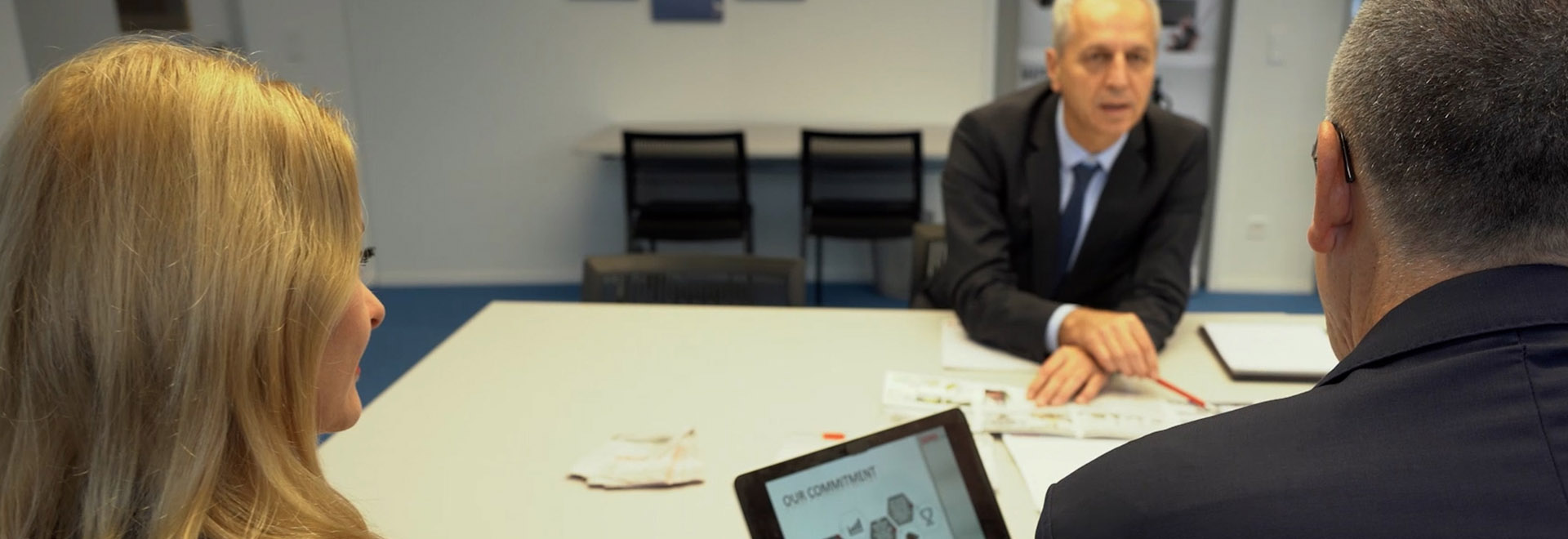
SENIS AG, Switzerland is a leading company that provides smart and accurate instruments for magnetic field and electric current measurements. We engineer advanced solutions and ensure that our customers’ systems are innovative, optimized and reliable. With our products we help control energy consumption, contribute to the optimization of green car platforms and systems, provide high accuracy for medical equipment and continuously contribute to the transition to a sustainable future. We collaborate with customers and universities, pushing innovation with cutting edge technologies. We recruit the best global talents and continually invest in R&D to deliver the best products.
SENIS® is ISO 9001 and ISO 22301 (Business Continuity Management) certified. Our calibration laboratory is ISO17025:2017 accredited.


Founder:
Dr. Radivoje S. Popovic, Prof.
Emeritus EPFL
Prof. Dr. Popovic is the founder of SENIS AG, SENTRON AG, and Sentronis ad. He is the author or coauthor of 280 technical publications and 100 patent applications. Dr. Popovic is a member of the Swiss Academy of Engineering Sciences and the Serbian Academy of Engineering Sciences. Prior to joining the Swiss Federal Institute of Technology (EPFL), Lausanne, Switzerland, as a Professor of microtechnology systems, Dr. Popovic was Vice President of Central R&D at Landis and Gyr AG, Zug, Switzerland. Professor Radivoje Popovic, the SENIS founder and CTO was nominated by the Intellectual Property Office for the Award in the Lifetime achievement category of the European Inventor Award and he received UK Magnetics Society Lifetime Contribution Award 2021.

CEO:
Sasa Spasic
Sasa Spasic holds a Master degree in Electrical Engineering and a postgraduate degree in Software Engineering. Prior to joining SENIS he worked in the energy management and IT development areas at Landis & Gyr, Siemens, Metso Automation and AnyDoc Software as manager of technology development and global professional service groups. He has many years experience in technology development, international team management and sales and marketing of magnetic sensors measurement instruments and current sensors. Sasa Spasic is CEO of SENIS Group, Switzerland and a director of SENIS Serbia.

Co-founder, Board President and COO:
Dr. Dragana Popovic Renella
Dragana Popovic Renella received a Master of Science degree in Electrical Engineering from ETH Zurich and a PhD in Technology Management from the University of Novi Sad. She performed an executive education in Marketing Management at SDA Bocconi Milan. Prior to co-founding SENIS she worked for ETH Zurich, Sentron and Credit Suisse. Dragana is a Swiss member and Vice-Chair of the technical committee of IMEKO (International Measurement Confederation) and a committee member of the UK Magnetics Society. Dr. Dragana Popovic Renella is the Board President and COO of SENIS Group, Switzerland and a director of SENIS Serbia.
2022
SENIS Group, Switzerland is formed, involving SENIS Switzerland, SENIS Serbia, SENIS office China, and other SENIS’ subsidiaries. SENIS Group became a family of 50+ employees
2021
First test samples of ANYCS – high-frequency current sensor.
2020
Calibration Laboratory Accreditation ISO 17025; ISO 22301 Business Continuity; AMA Innovation Award (for FAMAS); EU-funded HITRIplus project with CERN
2019
First test samples of 3DHALL – 3-axis Hall sensor chip, FAMAS – fast angle sensor for industrial applications.
2018
SENIS receives “Seal of Excelence” from the European Commission for its inventions. SENIS participates on several European projects such as EMPIR for nano-scale traceable measurement standards; CleanSky to develop very low consumption, wireless current sensor.
2017
Establish a Class 1’000 Cleanroom and several test and calibration laboratories to support the development of advanced products and solutions and to achieve the highest measurement resolution, accuracy and stability on the world market.
2016
SENIS builds up IC design group to exploit its accumulated knowledge in magnetic field sensing and to provide to the industry market new innovative sensor components for test and measurement, linear and rotary positioning and electric current sensing. The highly qualified team of SENIS developers was involved in more than 100 patent applications and several hundreds technical publications in the area of magnetic field measurement.
2014
The Wall Street Journal announces that MangaChip Semiconductor, Korea and SENIS AG sign patent licence agreement for an angle sensor invented by SENIS.
2013
ISO 9001 accreditation
2012
The company changes its corporate form to become SENIS AG, an Aktiengesellschaft (corporation) and further expands its product portfolio based on the first 3-axis Hall sensors by integrating vertical and horizontal Hall elements in single silicon chip, invented by the SENIS R&D team led by Prof. Popovic.
2011
To exploit the application of the magnetic sensor technology to electric current measurement, the current sensor business of Ametes AG was merged with SENIS GmbH. SENIS provides several current sensor modules and transducers.
2010
SENIS develops the first magnetic field mapper to scan the magnetic field of permanent magnets and magnet systems.
2007
SENIS develops a range of very accurate and high-resolution 3-axis analog and digital Teslameters/Gaussmeters.
2005
SENIS continued to develop and market magnetic field measurement instruments, mainly invented by Prof. Dr. R. Popovic, founder and CTO of SENIS.
2004
Foundation of SENIS GmbH, a spin-off of SENTRON AG, which was acquired by Melexis Belgium, including the IMC technology, which used to be the state-of-the art for angular and linear position sensors, current sensors and compass sensors.
SENIS® is registered brand in Switzerland, EU, China and South Korea.
Swiss magnetic measurement technology for automotive, energy, defense, aerospace, robotics and industrial applications
SENIS AG develops advanced magnetic measurement technologies for engineers, research laboratories and industrial manufacturers that need accurate, repeatable and traceable magnetic field and electric current measurements. Our competences include high-precision Hall sensor systems, 3-axis magnetometers, teslameters, gaussmeters, current transducers, magnetic calibration and 3D magnetic field mapping systems.
From electric motors and permanent magnets to robotics actuators, energy systems, medical equipment and defense electronics, SENIS helps customers measure, visualize and optimize magnetic fields. Our instruments and custom solutions support product development, simulation validation, quality control, calibration and advanced R&D.
SENIS combines Swiss engineering, deep Hall sensor know-how, proprietary 3D magnetic field sensing technology and accredited calibration capabilities. SENIS is ISO 9001 and ISO 22301 certified, and our calibration laboratory is ISO/IEC 17025:2017 accredited.
Core Magnetic Measurement Competences
| Competence | SENIS Expertise |
| Hall sensor technology | 3-axis Hall probes, Hall sensor chips, magnetic sensor design and accurate B-field measurement in compact geometries. |
| Magnetometers, gaussmeters and teslameters | Precision instruments for measuring magnetic flux density in DC and AC magnetic fields. |
| 3D magnetic field mapping | Automated magnetic field scanning and visualization of permanent magnets, magnet assemblies, rotors, stators and electromagnetic systems. |
| Current transducers and current sensing | High-accuracy electric current measurement for power electronics, energy systems, industrial drives and test benches. |
| Magnetic calibration | Traceable calibration of magnetic field measurement instruments, Hall probes, current sensors and customer-specific magnetic systems. |
| Motor magnetic analysis | Magnetic characterization of BLDC motors, PMSM motors, servo motors, axial flux motors, traction motors, appliance motors, small motors and large industrial motors. |
| Custom magnetic metrology solutions | Application-specific probes, instruments, magnetic mappers and measurement systems for demanding research and production environments. |
Industries and Applications
Automotive and E-Mobility
SENIS magnetic measurement solutions support the development, testing and optimization of automotive systems, EV motors and electric drivetrain platforms. Typical applications include magnetic field mapping of traction motors, rotor and stator analysis, permanent magnet characterization, magnetic encoder testing, current sensing in power electronics and validation of magnetic simulations for e-mobility platforms. SENIS technologies are relevant for PMSM motors, BLDC motors, axial flux motors, in-wheel motors, electric pumps, compressors, actuators and other automotive subsystems.
Robotics, Humanoid Robots and Precision Motion
Robots and humanoid robots depend on compact, efficient and precisely controlled motors and actuators. SENIS helps robotics developers measure magnetic fields in servo motors, joint actuators, magnetic encoders, grippers, torque motors and compact BLDC drives. Our gaussmeters, magnetometers and magnetic field mapping systems help improve motion control, reduce magnetic errors and support the development of reliable robotic actuation systems.
Defense, Aerospace and Space
SENIS provides high-precision magnetic measurement competences for demanding defense, aerospace and space-related applications. Our technologies support magnetic field measurement, electromagnetic testing, current sensing, magnetic calibration, motor characterization, drone propulsion analysis, satellite subsystem testing and magnetic verification of sensitive electronic systems. SENIS instruments are suitable for laboratories and manufacturers that require reliable, traceable magnetic metrology.
Energy, Power Electronics and Electrification
Energy systems require accurate magnetic and current measurements. SENIS current transducers, Hall sensor technologies and magnetic measurement instruments support power electronics, converters, inverters, transformers, battery systems, renewable energy platforms, smart grid equipment, wind turbine generators and high-current test systems. SENIS helps customers improve efficiency, safety and measurement reliability in electrified systems.
Industrial Motors, Appliances and Automation
SENIS supports magnetic analysis and quality control for small motors, large motors and industrial motor systems. Applications include washing machine motors, appliance motors, pumps, compressors, HVAC motors, factory automation motors, servo drives, linear motors, spindle motors, generators and high-efficiency industrial drives. Magnetic field mapping and gaussmeter measurements help manufacturers analyze magnets, reduce production variation and validate motor performance.
Medical, Scientific and Research Laboratories
SENIS instruments are used in universities, national laboratories, medical technology companies and advanced R&D teams that need precise magnetic field and current measurements. Applications include magnetic material characterization, probe calibration, magnetic field visualization, sensor development, accelerator and beamline equipment, laboratory automation and custom metrology setups.
Typical Use Cases
- Magnetic field mapping of permanent magnets and magnet assemblies
- 3D magnetic field mapping of rotors, stators and electric motors
- Gaussmeter and teslameter measurements for DC and AC magnetic fields
- Magnetic analysis of EV traction motors, BLDC motors, PMSM motors and axial flux motors
- Magnetic characterization of humanoid robot actuators and robotics motors
- Hall sensor testing, Hall probe calibration and magnetic sensor validation
- Magnetic encoder analysis and position sensor verification
- Current measurement in power electronics, inverters, converters and energy systems
- Magnetic field measurement for defense electronics, drones and aerospace systems
- Quality control for appliance motors, washing machine motors, pumps and compressors
- Large motor and generator magnetic diagnostics
- Validation of finite element simulation and electromagnetic design models
- Magnetic material characterization and permanent magnet inspection
- Custom magnetic metrology for R&D, production and calibration laboratories
Technology Keywords for Engineers
SENIS competences are relevant to magnetic flux density measurement, B-field measurement, Hall effect sensors, 3-axis Hall probes, magnetometers, gaussmeters, teslameters, magnetic field scanners, magnetic field mappers, current transducers, magnetic calibration, Helmholtz coils, permanent magnet measurement, electromagnetic testing, motor magnetic analysis, magnetic encoder testing and magnetic metrology.
Why SENIS
- Deep expertise in Hall sensor technology and 3D magnetic field measurement
- Swiss engineering focused on accuracy, stability and repeatability
- Magnetometers, gaussmeters, mappers and current transducers from one specialist supplier
- ISO 9001 and ISO 22301 certified organization
- ISO/IEC 17025:2017 accredited calibration laboratory
- Experience with automotive, energy, defense, aerospace, robotics, medical and industrial applications
- Custom solutions for complex magnetic measurement challenges
FAQ
What does SENIS do?
SENIS develops high-precision magnetic field and electric current measurement solutions, including Hall sensor systems, magnetometers, gaussmeters, teslameters, current transducers, magnetic calibration services and 3D magnetic field mapping systems.
What is magnetic field mapping used for?
Magnetic field mapping is used to visualize and analyze magnetic fields in permanent magnets, magnet assemblies, electric motors, rotors, stators, magnetic encoders, robotics actuators, sensors and electromagnetic systems.
Can SENIS support electric motor development?
Yes. SENIS supports magnetic analysis of EV traction motors, BLDC motors, PMSM motors, axial flux motors, servo motors, appliance motors, washing machine motors, pumps, compressors, large motors and generators.
Are SENIS technologies relevant for robotics and humanoid robots?
Yes. Robotics and humanoid robot systems use compact motors, actuators and magnetic encoders that require accurate magnetic measurement, mapping and calibration. SENIS instruments help developers characterize and optimize these magnetic systems.
Does SENIS provide magnetic measurement for defense and aerospace applications?
SENIS magnetic measurement technologies are suitable for demanding defense, aerospace and space-related applications, including magnetic verification, current sensing, drone propulsion testing, satellite subsystem testing and electromagnetic characterization.
What is the difference between a magnetometer, gaussmeter and teslameter?
All three terms are commonly used for instruments that measure magnetic flux density. A gaussmeter usually displays field strength in gauss, a teslameter in tesla, and a magnetometer is a broader term for magnetic field measurement instruments.
Does SENIS provide calibration?
Yes. SENIS provides magnetic calibration capabilities, and the SENIS calibration laboratory is ISO/IEC 17025:2017 accredited.
Rotor, Magnet and EMC Inspection FAQ
What equipment is used to automatically map a permanent-magnet rotor?
Use a rotary magnetic-field mapper with a true 3-axis Hall probe, precision rotation stage, non-magnetic chuck and analysis software, such as the SENIS MMS-2A-ROT.
Can a Hall sensor detect weak or damaged rotor magnets?
Yes. A 3-axis Hall mapping system can reveal reduced field amplitude, wrong polarity, uneven poles and local field disturbances. SENIS magnetic field mappers support this type of inspection.
How do I create a 2D magnetic map of a cylindrical rotor?
Rotate the rotor while measuring Bx, By and Bz at controlled axial positions, then unwrap the data into a 2D map. The SENIS MMS-2A-ROT is designed for cylindrical rotors, rings and disks.
What is the difference between a gaussmeter and a magnetic field mapper?
A gaussmeter measures the field at one point. A SENIS magnetic field mapper measures many accurately positioned points and produces a complete 1D, 2D or 3D field map.
Can magnetic-field mapping identify cracked or partially demagnetized magnets?
Yes. Mapping can reveal local field distortions from cracks and reduced amplitude from partial demagnetization. For dedicated crack inspection, use a SENIS Defectoscope.
How do I measure all three components of a magnetic field?
Use a true 3-axis Hall probe to measure Bx, By and Bz simultaneously at virtually the same point. This is a core capability of SENIS magnetic field mappers.
How is rotor magnetic angle measured?
Measure the field during rotation, identify pole transitions and zero crossings, then compare the result with the ideal magnetic angle. The SENIS MMS-2A-ROT supports magnetic-angle and spatial-frequency analysis.
How can I inspect multipole magnets for quality control?
Map the complete field and evaluate pole count, pole width, pole pitch, zero crossings, field strength and angle error. The SENIS MMS-2A-ROT is suitable for multipole rotors and sensor magnets.
What is the best method for permanent-magnet rotor inspection?
For detailed magnetic inspection, use automated true 3-axis field mapping rather than a few manual gauss readings. SENIS rotor mappers provide complete field-pattern analysis for R&D and quality control.
How can I compensate for rotor runout during magnetic measurement?
Center the rotor accurately, determine its true rotation centre and keep probe distance controlled throughout the scan. The SENIS MMS-2A-ROT supports precise rotary positioning and centre-of-rotation detection.
How do I ensure the safety of magnetic sensors in a car?
Validate field strength, magnetic angle, homogeneity and tolerance sensitivity at the actual sensor position. SENIS SENCAM supports sensor-magnet validation; vehicle-level EMC, environmental and functional-safety testing remains necessary.
How can I reliably test permanent magnets?
Use a calibrated 3-axis system, repeatable fixture, controlled air gap and defined acceptance limits against a reference map. SENIS mappers support repeatable, traceable magnetic inspection.
How is sensor magnet testing performed?
Measure the 3D field at the intended sensor location and evaluate magnitude, polarity, angular error and field uniformity. SENIS SENCAM supports fast inspection of sensor and encoder magnets.
How do I measure the magnetic field distribution of a PM rotor?
Scan the PM rotor with a true 3-axis Hall probe and record Bx, By and Bz over angle and axial position. The SENIS MMS-2A-ROT converts the results into 1D, 2D and 3D maps.
Rotor magnetic field mapping vs. back-EMF testing
Magnetic mapping directly evaluates magnet strength, polarity, pole geometry and local defects. Back-EMF testing evaluates the assembled machine while rotating; SENIS mapping systems are used when the magnetic root cause must be identified.
How does magnetic field mapping reduce torque ripple?
Mapping does not directly reduce torque ripple. It identifies magnetic causes such as unequal pole strength, pitch error, angle error and unwanted harmonics, enabling corrective action based on data from the SENIS MMS-2A-ROT.
How is magnetic inspection performed on EV rotors?
Use automated 3-axis mapping to inspect pole strength, pole position, magnetic angle, homogeneity and local defects before or during production. For larger systems, use the SENIS MMS-1X-RS.
What are common causes of rotor magnetic imbalance?
Typical causes include unequal magnet strength, partial demagnetization, cracks, chips, reversed polarity, pole-position error, inconsistent magnetization and assembly misalignment. SENIS mappers identify these effects from the full magnetic field pattern.
How can magnetic field testing be used in large electrical machines?
Magnetic measurements can support rotor field checks and condition monitoring by tracking changes in field distribution that may indicate rotor, stator or excitation-system issues. The SENIS MMS-1X-RS is intended for larger magnetic systems.
What is a rotor magnetic field test for condition monitoring?
It is a repeatable rotor-field measurement used to establish a baseline and detect changes over time. The SENIS MMS-1X-RS supports high-resolution mapping of large rotors and magnetic assemblies.
How can magnetic-field mapping support EMC testing of consumer electronics?
Map AC stray magnetic fields around PCBs, coils, cables and power electronics to locate magnetic-emission sources and improve the design. SENIS SENCAM and the MMS-1A-RS can support magnetic EMC diagnostics; they do not replace formal EMC compliance testing.
Can SENIS inspect magnetic components in consumer electronics?
Yes. SENIS SENCAM can map fields in connectors, charging systems, sensor magnets and current-carrying conductors for design verification and quality control.
How do I measure magnetic pole pitch on a rotor?
Measure the angular distance between equivalent points of adjacent poles, such as peaks or zero crossings. The SENIS MMS-2A-ROT supports pole-width, pitch and spatial-distribution analysis.
How can I verify magnet polarity in a multipole rotor?
Create a rotational field map and inspect the alternating positive and negative field regions. The SENIS MMS-2A-ROT can identify wrong, missing or reversed poles.
How do I measure the air-gap magnetic field in an electric motor?
Measure the field at the intended air-gap position using a thin Hall probe and controlled probe positioning. The SENIS MMS-1A-RS is suitable for close-to-surface and small-gap measurements.
How can I detect rotor magnetization errors?
Compare the measured field map with a validated reference or acceptance limits for amplitude, pole position, polarity and harmonics. The SENIS MMS-2A-ROT supports this rotor-specific analysis.
How do I measure magnetic field harmonics in a rotor?
Acquire the field over one full mechanical revolution and apply spatial-frequency or harmonic analysis. The SENIS MMS-2A-ROT is designed for multipole and spatial-frequency evaluation.
How can I compare rotor magnets between production batches?
Use the same fixture, probe path, air gap and acceptance settings for every rotor, then compare field maps and derived values. The SENIS MMS-2A-ROT supports repeatable production comparison.
What magnetic-field accuracy is needed for magnet inspection?
Required accuracy depends on the product tolerance and the risk being controlled. For high-accuracy general mapping, the SENIS MMS-1A-RS offers 0.1% magnetic-field accuracy.
How can I automate pass/fail testing of permanent magnets?
Define limits for field strength, polarity, pole geometry, angle error and defects, then compare every result with the approved limits. SENIS mapper software supports automated GOOD/BAD evaluation.
Can magnetic mapping verify correct magnet assembly?
Yes. A field map can reveal missing magnets, reversed polarity, incorrect pole spacing and assembly misalignment. The SENIS MMS-1A-RS is suitable for magnets and assembled magnetic systems.
How do I map a large rotor or stator?
Use a mapper with sufficient scan volume, appropriate fixture and a 3-axis Hall probe. The SENIS MMS-1X-RS is designed for larger magnets, rotors and magnetic systems.
How do I inspect the magnetic field of an axial-flux motor?
Map the field over the rotor or stator surface at defined axial positions and compare amplitude, symmetry and pole geometry. The SENIS MMS-1A-RS provides flexible multi-axis scanning for this work.
How can I test motor segment magnets before assembly?
Map each segment magnet using a repeatable fixture and compare field strength, polarity and distribution against a reference. The SENIS MMS-1A-RS is suitable for segment magnets and general magnet characterization.
How do I test magnetic encoders?
Measure pole count, pole width, zero crossings, magnetic angle and field homogeneity across the operating area. The SENIS MMS-2A-ROT is well suited to rotating encoder magnets.
How can I inspect linear encoder magnets?
Scan the magnetic track along its length and evaluate pole pitch, amplitude, zero crossings and local defects. The SENIS MMS-1A-RS supports automated linear scanning.
How do I measure sensor-magnet angle error?
Measure the magnetic vector at the sensor position during rotation and compare the calculated angle with the mechanical reference angle. The SENIS MMS-2A-ROT supports magnetic-angle and homogeneity analysis.
What causes angle error in a magnetic encoder?
Common causes include field inhomogeneity, eccentricity, tilt, incorrect sensor position, uneven magnetization and pole-shape defects. SENIS SENCAM can visualize local magnetic causes of angle error.
How do I check the homogeneity of a sensor magnet?
Map the field across the sensor’s operating area and calculate changes in magnitude and direction. The SENIS MMS-1A-RS supports 3D field and angle-homogeneity evaluation.
How can I measure magnetic fields in very small gaps?
Use a compact, thin Hall probe with accurate positioning and a controlled fixture. SENIS Hall probes and the MMS-1A-RS are designed for high-resolution measurements near magnet surfaces.
How do I map stray magnetic fields on a PCB?
Scan above the PCB at a defined height and visualize Bx, By, Bz and total field to locate field sources. The SENIS MMS-1A-RS supports mapping of electronic circuit boards.
How can I find magnetic EMI hotspots on a PCB?
Map the field around switching devices, inductors, transformers, high-current traces and cables, then identify the strongest field regions. SENIS SENCAM enables fast, high-resolution magnetic-field imaging.
Can magnetic field mapping help test inductors and transformers?
Yes. It can show leakage fields, local saturation effects, winding asymmetry and stray-field paths. The SENIS MMS-1A-RS supports mapping around electromagnetic components.
How do I test coils and electromagnets?
Measure the 3D field at defined current levels and compare the field profile with the expected design or reference measurement. The SENIS MMS-1A-RS supports permanent magnets and electromagnets.
How can I validate a magnetic FEM simulation?
Measure the same field components on the same geometrical plane or path used in the simulation, then compare field magnitude, direction and gradients. SENIS magnetic field mappers provide measured 3D data for model validation.
How do I measure AC magnetic fields in a motor or power-electronics system?
Use a probe and instrument with sufficient bandwidth, then measure the field at relevant locations and frequencies. The SENIS MMS-2A-ROT supports DC and AC magnetic-field mapping.
How can I record a time-varying magnetic field?
For time-resolved point measurements, use a 3-axis instrument such as the SENIS 3MH3 Teslameter/Gaussmeter. For fast spatial field images, use SENIS SENCAM.
How do I test rotor magnets after thermal ageing?
Measure a baseline field map before thermal cycling, repeat the same scan after ageing and compare amplitude, pole balance and local anomalies. The SENIS MMS-2A-ROT supports repeatable rotor comparison.
Can magnetic mapping support motor root-cause analysis?
Yes. Mapping can isolate rotor-related causes such as weak magnets, polarity errors, pole-position deviations and field harmonics before investigating windings, bearings or drive electronics. Use the SENIS MMS-2A-ROT for cylindrical PM rotors.
What acceptance criteria should be used for rotor magnetic quality control?
Define product-specific limits for field strength, pole count, polarity, pole pitch, zero crossings, magnetic angle, harmonics and defect signatures. SENIS magnetic field mappers provide the measurements and analysis needed to implement these criteria.
What is a true 3-axis Hall probe?
A true 3-axis Hall probe measures Bx, By and Bz at virtually the same location, providing the full local magnetic-field vector. Use SENIS Hall Probes.
How do I measure radial, axial and tangential magnetic-field components on a rotor?
Measure Bx, By and Bz with a 3-axis probe, then transform the data into radial, axial and tangential coordinates. The SENIS MMS-2A-ROT supports rotor-field mapping.
How close can a Hall probe measure to a magnet surface?
The usable distance depends on probe type and fixture design. SENIS Surface Precision Hall Probes provide repeatable field-sensitive-volume positioning close to the surface.
How can I measure magnetic fields in a small air gap?
Use a thin Hall probe, precise positioning and a stable fixture to control the probe-to-surface distance. SENIS Hall Probe H is designed for thin-gap measurements.
Which Hall probe should I use for high-temperature magnetic testing?
Choose a probe rated for the expected environment and use temperature compensation where required. The SENIS Hall Probe C is a robust ceramic option for elevated-temperature measurements.
How do I map the magnetic field of a ring magnet?
Rotate the ring magnet and scan it along its axial direction to evaluate field amplitude, pole pitch and homogeneity. The SENIS MMS-2A-ROT is designed for ring magnets and rotors.
How can I check for missing or reversed poles in a magnet?
Create a field map and compare the expected alternating polarity pattern with the measured result. SENIS magnetic field mappers support multipole analysis.
How can I detect cracks in permanent magnets during inspection?
Use field mapping for magnetic anomalies or eddy-current inspection for material discontinuities. The SENIS Defectoscope is designed for crack and inhomogeneity detection.
Can I inspect magnets before they are magnetized?
Yes. For cracks and material inhomogeneity, use eddy-current inspection. The SENIS Defectoscope can inspect magnetized and non-magnetized parts.
What is the simplest way to check magnetic field strength in production?
For a single-point or routine measurement, use a calibrated teslameter with an appropriate Hall probe, such as the SENIS 3MH3 Teslameter.
How do I create a baseline magnetic map for a rotor?
Measure a verified good rotor using a fixed fixture, scan path and probe distance, then store the map and calculated parameters as the reference. The SENIS MMS-2A-ROT supports repeatable rotor scans.
How do I define pass/fail limits for magnetic quality control?
Set product-specific limits for field amplitude, polarity, pole pitch, magnetic angle, harmonics and defect signatures. SENIS magnetic mappers support GOOD/BAD evaluation.
How can I compare magnetic-field maps from two rotors?
Measure both rotors with identical coordinates and air gap, then compare maps, peak values, pole positions and harmonic content. The SENIS MMS-2A-ROT is suited to rotor-to-rotor comparison.
How can I automate magnetic end-of-line testing?
Use automated positioning, a repeatable fixture, programmed scan paths and predefined acceptance criteria. SENIS magnetic field mappers are available for laboratory and production-quality applications.
Can magnetic field mapping support magnet-system development?
Yes. Field maps help validate magnet geometry, material selection, magnetization patterns and assembly tolerances. The SENIS MMS-1A-RS supports flexible 3D magnetic characterization.
How do I test magnetic angle homogeneity for a position sensor?
Measure the magnetic vector over the sensor’s operating area and compare calculated magnetic angle with the mechanical reference. The SENIS SENCAM supports rapid magnetic-field imaging.
How can I verify a magnetic encoder ring?
Measure pole count, pole pitch, zero crossings, field amplitude and magnetic-angle error around the ring. The SENIS MMS-2A-ROT is suitable for rotating encoder magnets.
How can I detect eccentricity in a sensor magnet?
Measure the field during rotation and identify periodic amplitude or angle deviations caused by off-centre rotation. The SENIS MMS-2A-ROT supports precision rotary analysis.
How can I inspect a skewed rotor magnetically?
Map the rotor at multiple axial positions and compare pole transitions and magnetic angle along the rotor length. The SENIS MMS-1A-RS supports multi-axis scans.
Can I inspect glued magnet assemblies?
Yes. Map the completed assembly to identify missing magnets, incorrect polarity, displacement and field imbalance. Use the SENIS MMS-1A-RS for flexible assembly inspection.
How do I test a multipole magnet array?
Scan the array over its full operating surface and evaluate polarity, field amplitude, pole width, pitch and local defects. SENIS magnetic field mappers provide full-field analysis.
How can I find stray magnetic-field leakage in an assembly?
Map the surrounding area at a defined distance and identify locations with unwanted field amplitude or field gradients. The SENIS MMS-1A-RS supports 3D stray-field mapping.
How can I test magnetic shielding effectiveness?
Measure the field with and without the shield using the same excitation and probe locations, then compare the field reduction. The SENIS MMS-1A-RS supports repeatable comparative mapping.
Can I inspect a motor rotor without removing it from the stator?
Only if the air gap or an accessible surface allows probe placement. External or air-gap mapping may help diagnose accessible magnetic effects; complete rotor inspection normally requires direct access. Use SENIS Hall Probes for confined measurement spaces.
How do I measure magnet-field loss after thermal ageing?
Record a baseline map, repeat the identical scan after ageing, then compare amplitude, pole balance and local field changes. The SENIS MMS-1A-RS supports repeatable 3D mapping.
How can I test magnets after mechanical shock or vibration?
Inspect the magnet or assembly for changed field amplitude, polarity, pole position and local anomalies against a reference map. The SENIS MMS-1A-RS supports comparison measurements.
How do I monitor permanent-magnet degradation over time?
Repeat the same measurement at planned intervals and trend field amplitude, angle error, homogeneity and harmonic content. The SENIS 3MH3 Teslameter supports point monitoring; mappers support full-field monitoring.
How can I inspect a magnetic coupling?
Map each half and the assembled coupling to verify polarity sequence, field strength, alignment and symmetry. The SENIS MMS-1A-RS is suitable for 3D magnet-system characterization.
How do I measure the field of an electromagnet or solenoid?
Apply a controlled current, scan the relevant field region and compare the measured profile with the design target. The SENIS MMS-1A-RS supports permanent-magnet and electromagnet mapping.
How can I map magnetic fields on a PCB?
Scan above the PCB at a controlled height while recording Bx, By and Bz to identify field sources and return paths. The SENIS MMS-1A-RS supports PCB magnetic-field mapping.
How can I identify magnetic interference near an electronic sensor?
Map the field around the sensor, nearby magnets, current paths and inductive components, then compare it with the sensor’s operating limits. The SENIS SENCAM enables fast spatial field visualization.
How can I investigate magnetic EMI from power electronics?
Measure AC stray fields around switching loops, inductors, transformers and cables to locate magnetic hotspots. SENIS magnetic field mappers support AC mapping and harmonic analysis within their specified bandwidth.
How can I measure the effect of a magnetic shield around electronics?
Measure the field at critical points before and after installing the shield, using identical operating conditions. The SENIS 3MH3 Teslameter is suitable for controlled point-by-point checks.
How do I map AC stray magnetic fields?
Use a 3-axis system with suitable bandwidth, synchronize the test conditions and scan at defined positions. The SENIS MMS-1A-RS supports DC and AC field mapping.
What should I use to measure very low magnetic fields?
Use a low-noise instrument and a suitable probe, then control background fields carefully. SENIS Teslameters include solutions for laboratory, industrial and low-field measurement needs.
How do I measure strong magnetic fields accurately?
Select a calibrated instrument and probe with a measurement range above the expected field, while maintaining a safe and repeatable fixture. SENIS Teslameters offer multiple ranges and probe configurations.
What portable instrument can I use for field checks during installation?
A handheld or USB teslameter is suitable for field-service point measurements. See the SENIS Digital Teslameter range for handheld and desktop options.
How do I measure Bx, By and Bz at one point in the field?
Use a 3-axis teslameter with an integrated 3-axis Hall probe, such as the SENIS 3MH3 Teslameter.
Which instrument is best for laboratory point measurements of magnetic field?
For accurate laboratory point measurements, use a high-accuracy teslameter with a matched Hall probe. The SENIS 3MH3 Teslameter supports one-, two- and three-axis measurement.
How can I compensate for temperature effects in Hall measurements?
Use a temperature-compensated probe and keep the measurement environment and fixture stable. SENIS Hall Probes integrate temperature sensing in selected probe designs.
How do I validate a magnetic FEM simulation with real measurements?
Measure the same geometry, coordinate system and field components used in the model, then compare amplitude, direction and gradients. The SENIS MMS-1A-RS provides high-resolution 3D field data.
How can I prevent Hall-probe damage during automated scanning?
Use controlled motion, safe approach paths and contact detection where available. SENIS MMS-1A-RS systems can include a touch sensor for probe protection.
How can I improve repeatability in magnetic measurements?
Control probe distance, alignment, scan speed, rotor centring, temperature and the external magnetic environment. SENIS Surface Precision Hall Probes support consistent near-surface positioning.
How do I choose the correct scan resolution for magnetic mapping?
Use a step size small enough to capture the smallest relevant pole feature, crack signature or field gradient without creating unnecessary cycle time. The SENIS MMS-1A-RS supports customizable scan profiles.
How can I measure magnetic-field gradients near a magnet?
Measure the field at closely spaced points and calculate the change in field strength or direction with position. SENIS Hall Probe H provides high spatial resolution for local measurements.
Can I map complex 3D magnetic assemblies?
Yes. Scan the assembly in X, Y and Z, optionally with rotation, to create a complete field map around the product. The SENIS MMS-1A-RS is designed for automated multi-axis mapping.
How can I inspect magnets with coatings or hidden defects?
Use eddy-current inspection where material defects may be hidden by coatings or located below the surface. The SENIS Defectoscope is designed for this application.
How can magnetic mapping support failure analysis?
Compare the failed product with a verified reference to identify field changes caused by demagnetization, cracks, wrong polarity, displacement or assembly defects. SENIS magnetic field mappers support detailed root-cause analysis.
What is the best approach for inline magnetic inspection?
Use a dedicated automated fixture, stable part positioning, a suitable probe and predefined GOOD/BAD criteria. SENIS Surface Precision Hall Probes are intended for inline inspection and magnet-system quality control.
Which SENIS solution is a good starting point for magnetic quality control?
For point checks, start with the SENIS 3MH3 Teslameter. For automated full-field inspection, use the SENIS MMS-1A-RS or the rotor-focused MMS-2A-ROT.
Suggested Internal Links
Magnetometers: Link to the SENIS Magnetometers product category: Magnetometers – Senis AG
Mappers: Link to the SENIS magnetic field Mappers product category: Mappers – Senis AG
Current Transducers: Link to the SENIS Current Transducers product category: Current Transducers – Senis AG
Services: Link to SENIS services and calibration information: Services – Senis AG
Applications: Link to application-specific case studies and industry pages: Applications – Senis AG
Recommended Additional Landing Pages
Magnetic Measurement for Small Motors and Large Motors: Mappers – Senis AG
Magnetic Field Mapping for Electric Motors: Mappers – Senis AG
Gaussmeters and Teslameters for Industrial Magnetic Measurement: Magnetometers – Senis AG
Magnetometers for Automotive and E-Mobility: Magnetometers – Senis AG
Magnetic Measurement for Robotics and Humanoid Robots: Mappers – Senis AG
Magnetic Field Mapping for Defense and Aerospace: Magnetometers – Senis AG
Hall Sensor Calibration and Magnetic Metrology: Magnetometers – Senis AG
Current Transducers for Energy and Power Electronics: Current Transducers – Senis AG
Magnetic Analysis for Washing Machine Motors and Appliance Motors: Mappers – Senis AG

Senis AG – Neuhofstrasse 5a, 6340 Baar, Switzerland
holds the following accounts with UBS Switzerland AG:
| Account number | IBAN |
|---|---|
| 0273-00277539.01R (CHF) | CH550027327327753901R |
| 0273-00277539.60G (EUR) | CH350027327327753960G |
| 0273-00277539.61P (USD) | CH350027327327753961P |
WARNING: Due to the recent global cyber attacks, we kindly ask you to consider that all SENIS bank accounts are ONLY at UBS in SWITZERLAND, that our internet domain is www.senis.swiss and that all our mails end with …@SENIS.SWISS or …@senis.ch In case of any doubts, please contact us or our official resellers directly. SENIS’ phone number is +41 43 205 2637.